Designing With Nature in a City That Can No Longer Ignore It
Cebu City is growing fast.
New buildings rise every year. Roads expand. Concrete spreads.
But with that growth comes a question we can’t avoid anymore:
Can Cebu keep developing the same way — and still remain livable?
The answer is becoming clearer with every flood, every heatwave, and every power-hungry building.
☀️ Cebu’s Climate: A Blessing — and a Challenge
Cebu is naturally rich:
- Abundant sunlight
- Warm tropical temperatures
- Heavy seasonal rainfall
- Coastal and mountainous ecosystems
But when cities ignore nature, these strengths turn into urban problems.
🌡️ The Heat Problem
Concrete absorbs heat.
Glass traps it.
As green spaces disappear, Cebu experiences:
- Higher daytime temperatures
- Warmer nights (urban heat island effect)
- Increased reliance on air-conditioning
- Higher electricity costs
Buildings designed without natural ventilation or shading fight the climate instead of working with it.
🌧️ Flooding: A Design Failure, Not Just a Weather Problem
Flooding in Cebu is often blamed on “heavy rain.”
But rain isn’t the enemy.
The real issue is:
- Paved surfaces that don’t absorb water
- Buildings that push rainwater straight into drains
- Loss of soil, trees, and natural waterways
When rain has nowhere to go, streets flood, traffic stops, and homes are damaged.
Flooding is not just an infrastructure issue — it’s a design issue.
🏙️ Urban Density: When Space Runs Out, Nature Gets Cut
As Cebu becomes denser:
- Open land disappears
- Vertical development increases
- Natural airflow is blocked
- Green spaces are reduced to decoration
Without thoughtful planning, dense cities become hotter, noisier, and more stressful.
Biophilic architecture offers a different approach:
If cities must grow upward, nature must grow with them.
🌿 Nature-Based Solutions: How Biophilic Design Builds Resilience
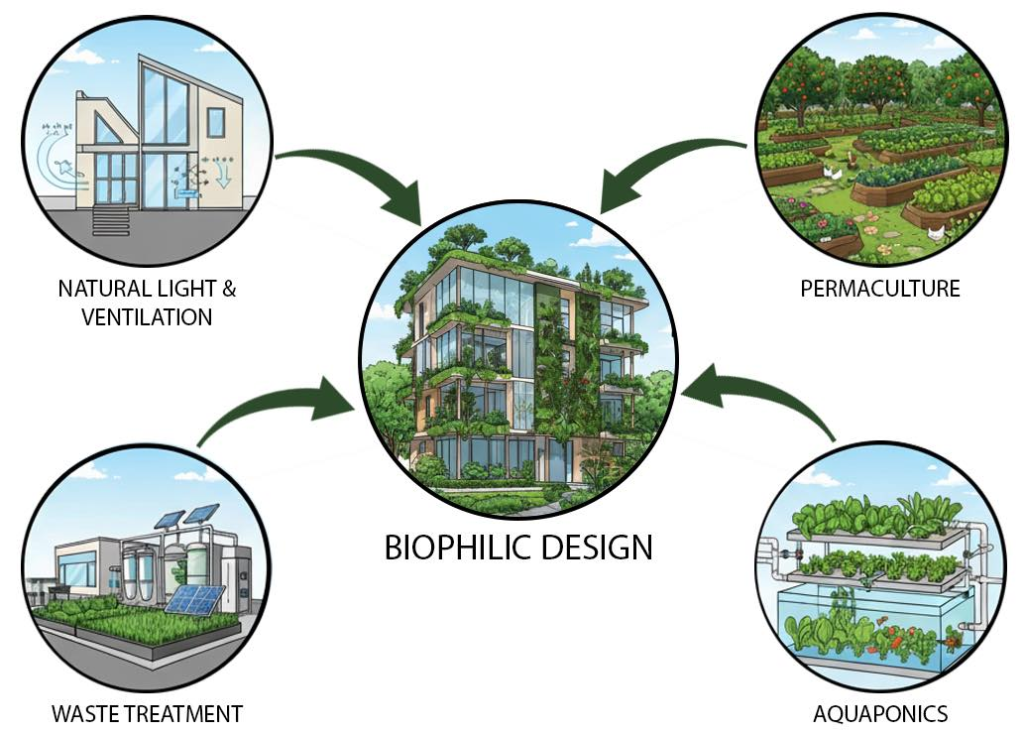
Biophilic architecture uses nature as infrastructure.
🌱 Cooling the City Naturally
- Trees and plants shade buildings
- Green walls and roofs reduce heat absorption
- Natural ventilation reduces reliance on air-conditioning
Result: Cooler interiors, lower energy use, better comfort.
🌧️ Managing Rainwater the Smart Way
- Green roofs absorb rainfall
- Rain gardens slow runoff
- Permeable surfaces allow water to soak into the ground
Instead of overwhelming drainage systems, water is captured, slowed, and reused.
🌬️ Improving Airflow & Air Quality
- Thoughtful building orientation
- Open courtyards and breezeways
- Vegetation that filters dust and pollutants
Buildings begin to breathe like natural systems.
🧠 The Human Side of Resilience
Resilience isn’t just about surviving storms — it’s about how people feel every day.
Biophilic spaces:
- Reduce stress and mental fatigue
- Improve focus and well-being
- Encourage social interaction
- Restore a sense of calm in urban life
In a fast-paced city like Cebu, this matters more than ever.
🌴 Why Cebu Is Perfect for Biophilic Architecture
Cebu already has what biophilic design needs:
- Sunlight
- Wind
- Rain
- Local materials
- A culture connected to outdoor living
The missing piece is intentional design.
When architecture respects the environment, the city becomes:
✔ Cooler
✔ Healthier
✔ More flood-resilient
✔ More sustainable long-term
🌿 The Choice Cities Face
Cebu can continue building:
- Hotter structures
- Flood-prone developments
- Energy-hungry buildings
Or it can design spaces that:
Protect people, respect nature, and prepare for the future.
Biophilic architecture isn’t just relevant in Cebu.
It’s essential.
Leave a Reply