What It Really Takes to Build a Nature-Integrated Home
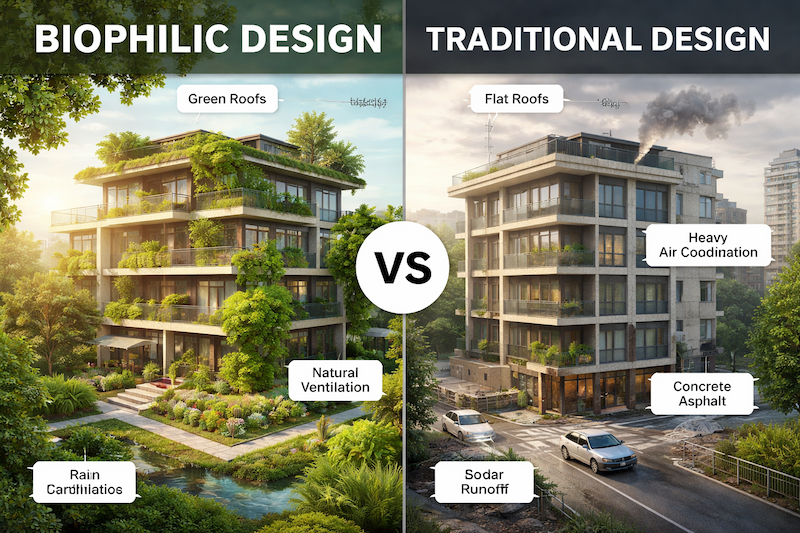
By now, we’ve explored what biophilic architecture is, why it matters in Cebu, and how it outperforms conventional design.
But let’s address the most practical question:
How much does it cost — and how do you actually start?
Because beautiful ideas mean nothing without a realistic plan.
How Much Does It Cost to Build a Biophilic Home in Cebu?
First, here’s the truth:
Biophilic design is not a separate “type” of house —
it’s a design philosophy integrated into your build.
Typical Residential Construction Cost in Cebu (2026 Estimate)
- Basic finish: ₱18,000 – ₱30,000 per sqm
- Mid-range modern home: ₱30,000 – ₱45,000 per sqm
- High-end custom design: ₱45,000 – ₱65,000+ per sqm
Now the important part:
Biophilic elements may add 5%–15% more upfront cost depending on complexity.
But here’s what affects that increase.
What Adds to the Cost?
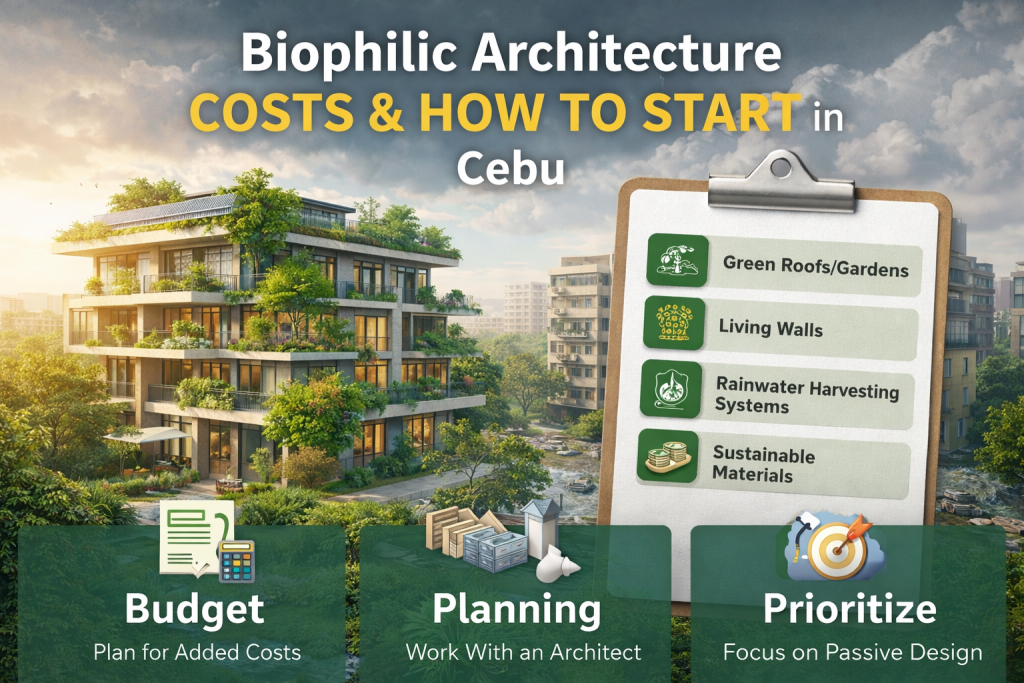
Green Roofs or Roof Gardens
- Structural reinforcement
- Waterproofing systems
- Drainage layers
- Irrigation setup
Higher upfront cost — but reduces heat gain and extends roof lifespan.
Living Walls / Vertical Gardens
- Support framing
- Plant selection
- Irrigation system
- Maintenance planning
Great for cooling and aesthetics, but requires professional planning.
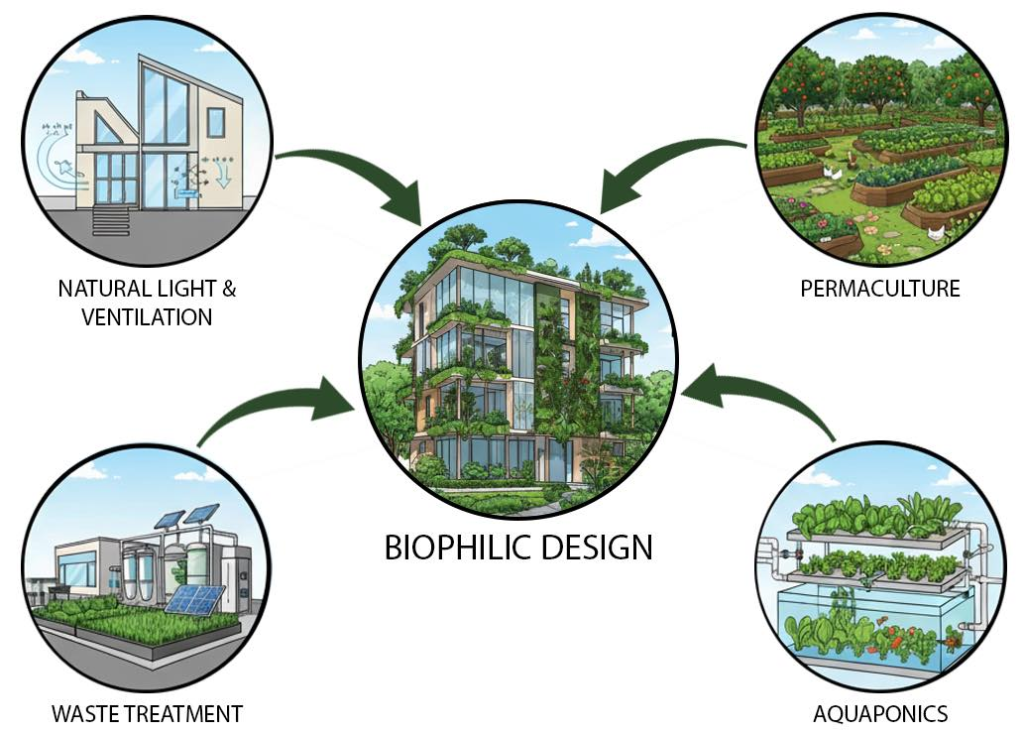
Passive Design & Natural Ventilation
This is where smart design saves money.
Proper orientation, window placement, shading devices, and airflow planning may not increase cost significantly — but must be planned from the beginning.
Rainwater Harvesting Systems
- Storage tanks
- Filtration systems
- Plumbing integration
Reduces water bills and improves flood management.
Sustainable Materials
- Engineered wood
- Bamboo
- Insulated glazing
- Eco-friendly finishes
Costs vary — some materials are slightly higher, some are comparable.
The Bigger Financial Picture
Many people ask:
“Is biophilic design expensive?”
The better question is:
“Is ignoring climate expensive?”
Because over time, conventional homes cost more in:
- High electricity bills (AC use)
- Faster material deterioration
- Increased flood damage risk
- Lower resale value
- Reduced occupant comfort
Biophilic homes often:
✔ Lower cooling costs
✔ Improve long-term property value
✔ Require less artificial lighting
✔ Perform better in tropical climates
It’s not about spending more —
it’s about investing smarter.
How to Start: Step-by-Step Guide
If you’re serious about building a biophilic home or building in Cebu, here’s your roadmap.
Step 1: Choose the Right Lot
Look for:
- Natural airflow access
- Proper drainage conditions
- Sun orientation potential
- Avoidance of flood-prone zones
The site determines 50% of your design success.
Step 2: Work With a Biophilic-Focused Architect
This is critical.
Biophilic design must be integrated:
- Before structural planning
- Before layout finalization
- Before budgeting is locked
Retrofitting “green features” later becomes more expensive.
Step 3: Set a Realistic Budget
Allocate:
- 10–15% contingency
- 5–15% for biophilic features depending on scope
- Long-term operational savings forecast
Think 20–30 years ahead — not just construction turnover.
Step 4: Prioritize Passive First
Before adding expensive green systems, focus on:
- Proper orientation
- Cross-ventilation
- Shading strategies
- Natural daylight
- Courtyard or open planning
Passive design gives the highest return on investment.
Step 5: Add Active Green Systems Strategically
Then layer in:
- Green roofs
- Vertical gardens
- Rainwater harvesting
- Solar panels (optional synergy)
Build in phases if needed.
Why Professional Design Makes the Difference
The biggest cost mistake people make?
Trying to apply biophilic elements without a cohesive design strategy.
True biophilic architecture requires:
- Climate analysis
- Structural coordination
- Landscape integration
- Long-term sustainability planning
This is why working with experienced firms like
Roots & Roof Architects can significantly improve both performance and cost efficiency.
They specialize in:
- Modern biophilic residential and building design
- Climate-responsive architecture for tropical environments
- International design standards adapted locally
- Long-term performance-based planning
If you’re considering a biophilic home or development, it’s worth exploring their approach: